
Commercial Floor Stripping and Waxing: Every Step Explained
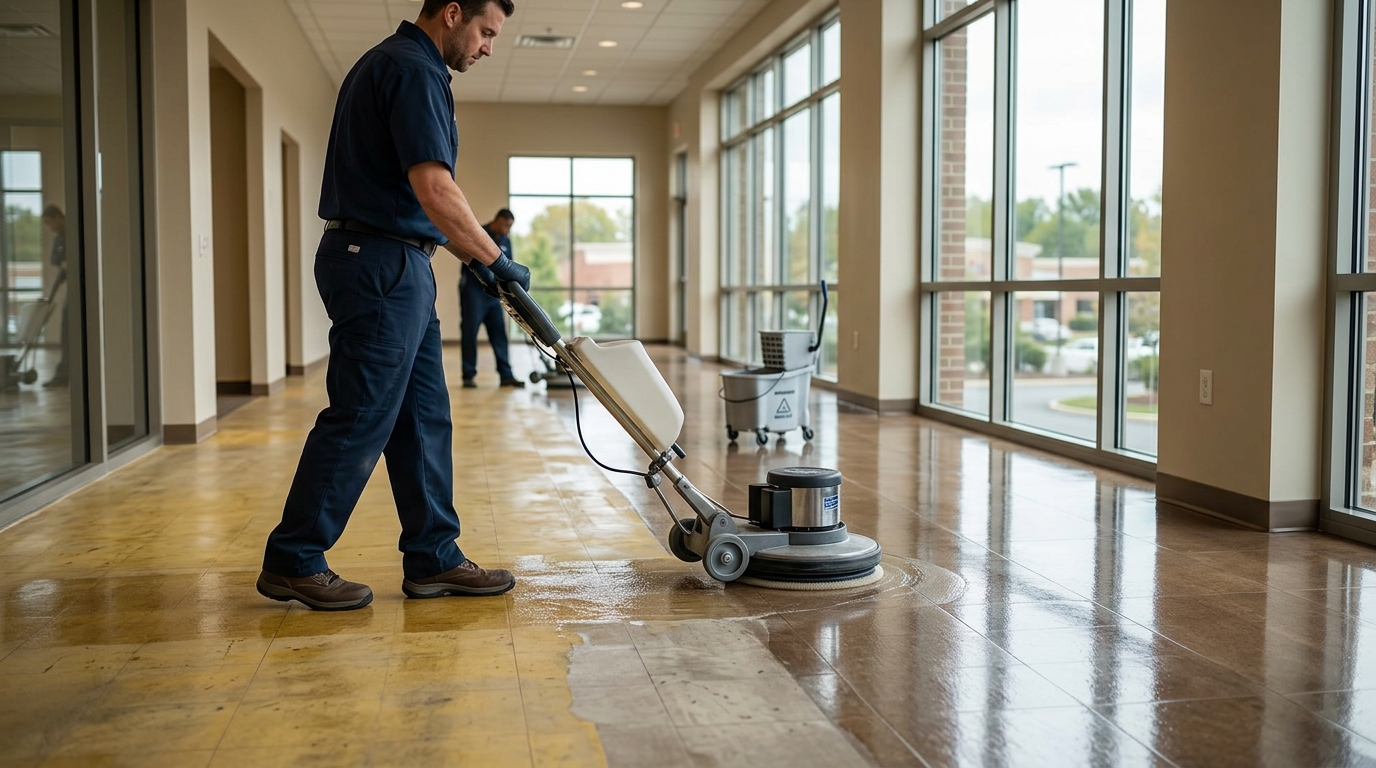
If the floors in your office building, school, or daycare look dull, yellowed, or scuffed, it may be time for a professional floor stripping and waxing service. Floor stripping and waxing is the process of removing old, worn layers of finish from hard flooring and applying fresh coats of wax to restore shine and protection. Understanding the specific steps involved helps facility managers know exactly what to expect and why professional execution matters. At S&S Cleaning Service, we include tile floor stripping and waxing as part of our all-in-one cleaning solutions for businesses across Chester County, PA and beyond.
What Is Floor Stripping and Waxing?
Floor stripping and waxing is a detailed cleaning technique that involves removing layers of old wax, dirt, and grime from commercial hard floors, then applying new protective coats of finish. It is commonly performed on VCT (vinyl composition tile), linoleum, and other hard-surface flooring found in offices, schools, and commercial buildings.
Over time, foot traffic, dirt, and cleaning chemicals degrade existing floor finish. A professional stripping and waxing service restores the floor to a like-new condition while extending the lifespan of the underlying surface. This process saves businesses money by delaying costly floor replacements.
Step 1: Area Preparation and Safety Setup
Preparation is the foundation of a quality result. Technicians begin by removing all furniture, mats, trash cans, and other obstructions to expose the entire floor surface. Wet floor signs and caution tape are placed to cordon off the work area and protect building occupants.
Next, the floor is thoroughly dust-mopped or swept to remove loose debris, dirt, and any large objects. This prevents contaminants from interfering with the stripping chemicals. At S&S Cleaning Service, our crews work during off-hours to minimize disruption to your daily operations.
Step 2: Applying the Stripping Solution
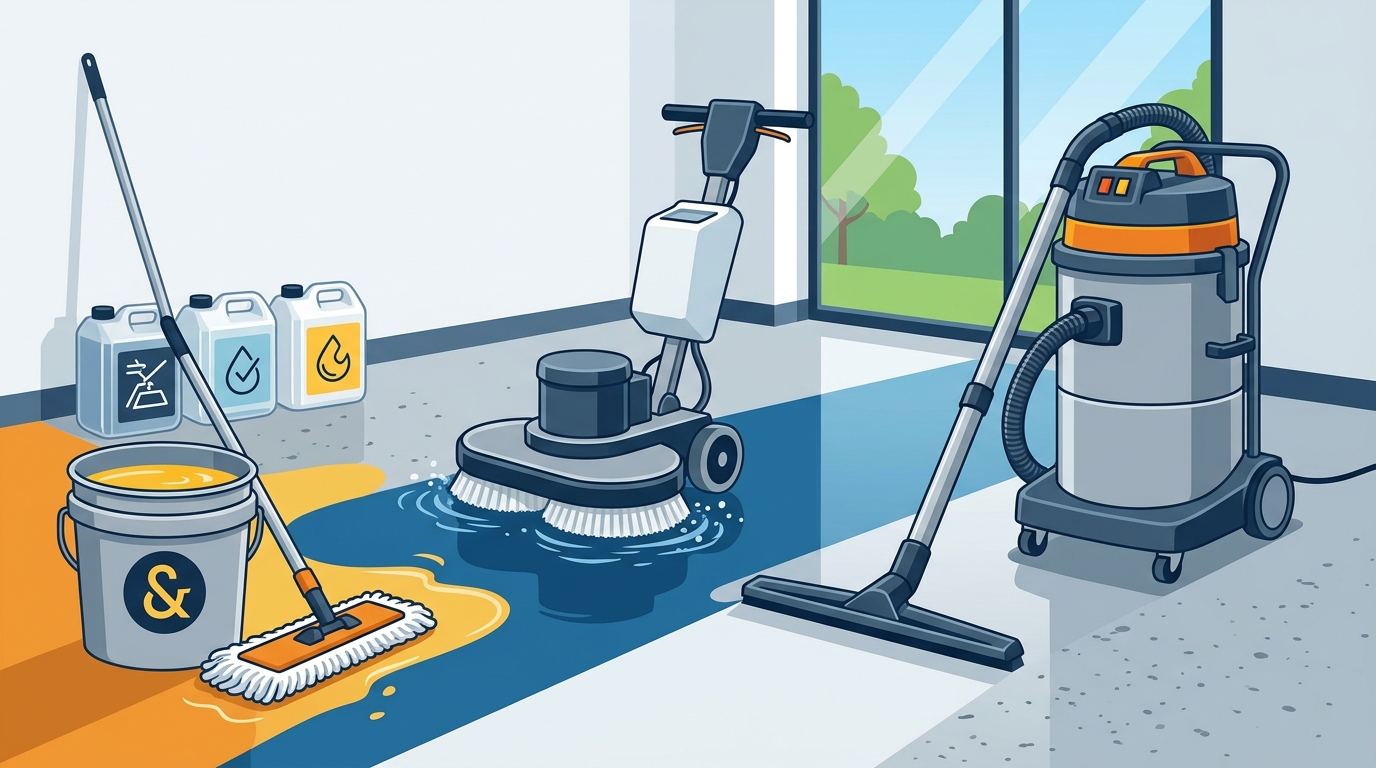
A stripping solution is a commercial-grade chemical designed to dissolve and soften old layers of floor wax and finish. Technicians dilute the solution according to manufacturer instructions, then apply it generously to the floor using a mop, working in manageable sections of roughly 200 to 400 square feet at a time.
The solution must dwell on the surface for 10 to 15 minutes to properly break down existing finish layers. It is critical that the solution does not dry on the floor, as dried stripper becomes much harder to remove and can damage the underlying surface.
Safety Precautions
Proper personal protective equipment (PPE) is essential during this step. Technicians wear chemical-resistant gloves, eye protection, and protective footwear. Adequate ventilation should be maintained throughout the process.
Step 3: Mechanical Scrubbing and Agitation
Once the stripping solution has softened the old finish, a floor machine equipped with an aggressive black stripping pad is used to scrub the surface. This agitation step breaks down stubborn layers that chemicals alone cannot fully remove.
Technicians make consistent, overlapping passes to ensure complete coverage. Corners, edges, and baseboards often require manual scrubbing pads or specialized tools. In areas with heavy buildup, this step may need to be repeated one to three times to reach the bare floor surface.
Step 4: Slurry Removal and Rinsing
Slurry is the mixture of dissolved wax, dirt, and stripping solution that accumulates on the floor after scrubbing. It is immediately extracted using a wet/dry vacuum or auto-scrubber to prevent re-deposit on the clean surface.
After slurry removal, the floor is rinsed thoroughly, typically two to three times with clean water. Any leftover chemical residue will prevent new wax from bonding properly. The floor must then dry completely before the next phase begins. Fans or air movers are commonly used to speed up drying time.
Step 5: Wax and Finish Application
With a clean, dry, bare floor, technicians apply new floor finish using a clean mop or wax applicator that has never been used for other cleaning tasks. Thin, even coats are applied one at a time, with each coat drying for approximately 30 to 45 minutes before the next is added.
Most commercial floor care professionals apply between three and five coats of finish for standard areas. High-traffic zones such as lobbies, hallways, and entryways may require five or six coats for added durability. The following table summarizes typical coat recommendations:
| Area Type | Recommended Coats | Drying Time Per Coat |
|---|---|---|
| Standard office space | 3 to 4 coats | 30 to 45 minutes |
| High-traffic hallway or lobby | 5 to 6 coats | 30 to 45 minutes |
| Manufacturing or warehouse | 6 to 10 coats | 30 to 45 minutes |
Optional Sealer Step
Some floors benefit from a sealer coat applied before waxing. A sealer is a base-layer product that fills pores and micro-cracks in the flooring material, allowing the wax to bond more effectively. This step is especially valuable on concrete and VCT surfaces.
Step 6: Buffing and Final Polish
Buffing is the final step that delivers the high-gloss, mirror-like shine most businesses expect. A high-speed burnishing machine with a polishing pad is run across the cured wax to smooth the surface and bring out a deep luster. This process also helps cure the wax for a more durable, longer-lasting finish.
After buffing, the floor is ready for foot traffic. For maximum curing and hardness, it is best to allow approximately eight hours before heavy use. Our floor refinishing and burnishing services ensure your facility floors look professional and polished year-round.
How Often Should You Strip and Wax Floors?
Frequency depends on traffic volume and the type of facility. For standard commercial office buildings, stripping and waxing once or twice per year is typically sufficient. Manufacturing facilities and schools with higher foot traffic may require quarterly service.
Between full strip-and-wax cycles, regular maintenance such as dust mopping, damp mopping, and periodic buffing or top-scrub-and-recoat services extends the life of the finish significantly. S&S Cleaning Service bundles floor care into ongoing maintenance plans, so you never have to manage multiple vendors.
Key Takeaways
- Commercial floor stripping and waxing involves six main steps: preparation, stripping, scrubbing, slurry removal and rinsing, wax application, and buffing.
- The stripping solution must dwell for 10 to 15 minutes and should never be allowed to dry on the floor.
- Three to six coats of finish are standard, with high-traffic areas needing more.
- Thorough rinsing after stripping is critical for proper wax adhesion.
- Most office buildings need this service once or twice per year.
- Hiring a professional commercial cleaning company ensures proper equipment, chemicals, and technique.
- S&S Cleaning Service includes floor stripping and waxing as part of integrated facility maintenance plans throughout Chester County, PA.
Frequently Asked Questions
What types of floors can be stripped and waxed?
Floor stripping and waxing is designed for hard-surface commercial flooring such as VCT, vinyl, linoleum, and certain types of tile. It is not recommended for wood, laminate, or ceramic tile floors.
How long does a commercial floor stripping and waxing service take?
Most standard commercial spaces can be completed overnight. Larger facilities may require additional time, but professional crews schedule work during off-hours to avoid business disruption.
How many coats of wax are applied?
Typically three to five coats are applied for standard areas. High-traffic zones like lobbies and hallways may receive five to six coats, while industrial floors can require up to ten coats for maximum durability.
Can I walk on the floor right after waxing?
Light foot traffic is generally possible 30 to 45 minutes after the final coat dries. However, allowing approximately eight hours of curing time produces the hardest, most durable finish.
How often should commercial floors be stripped and waxed?
For most office buildings, once or twice per year is recommended. High-traffic facilities such as schools or manufacturing plants may benefit from quarterly service.
What is the difference between buffing and stripping?
Buffing is a lighter maintenance step that polishes the existing wax layer to restore shine. Stripping is a more intensive process that completely removes all old wax down to the bare floor before fresh coats are applied.
Does S&S Cleaning Service offer floor stripping and waxing?
Yes. S&S Cleaning Service provides tile floor stripping and waxing as part of comprehensive commercial cleaning plans across Chester County, PA, including West Chester, Exton, Malvern, Downingtown, Kennett Square, and surrounding areas.
Why should I hire a professional instead of doing it myself?
Professional crews bring commercial-grade equipment, proper chemical knowledge, and trained technique. DIY attempts risk uneven finishes, chemical damage, and wasted time. A veteran-owned company like S&S Cleaning Service delivers consistent, reliable results every time.
Ready to Restore Your Facility's Floors?
S&S Cleaning Service is a veteran and family-owned commercial cleaning company serving Chester County, PA since 1993. We include floor stripping and waxing in our fully integrated facility maintenance plans, so you get one company, one contract, and complete floor care. Request your free, no-obligation estimate today or call (610) 331-6137 to speak with our team.