
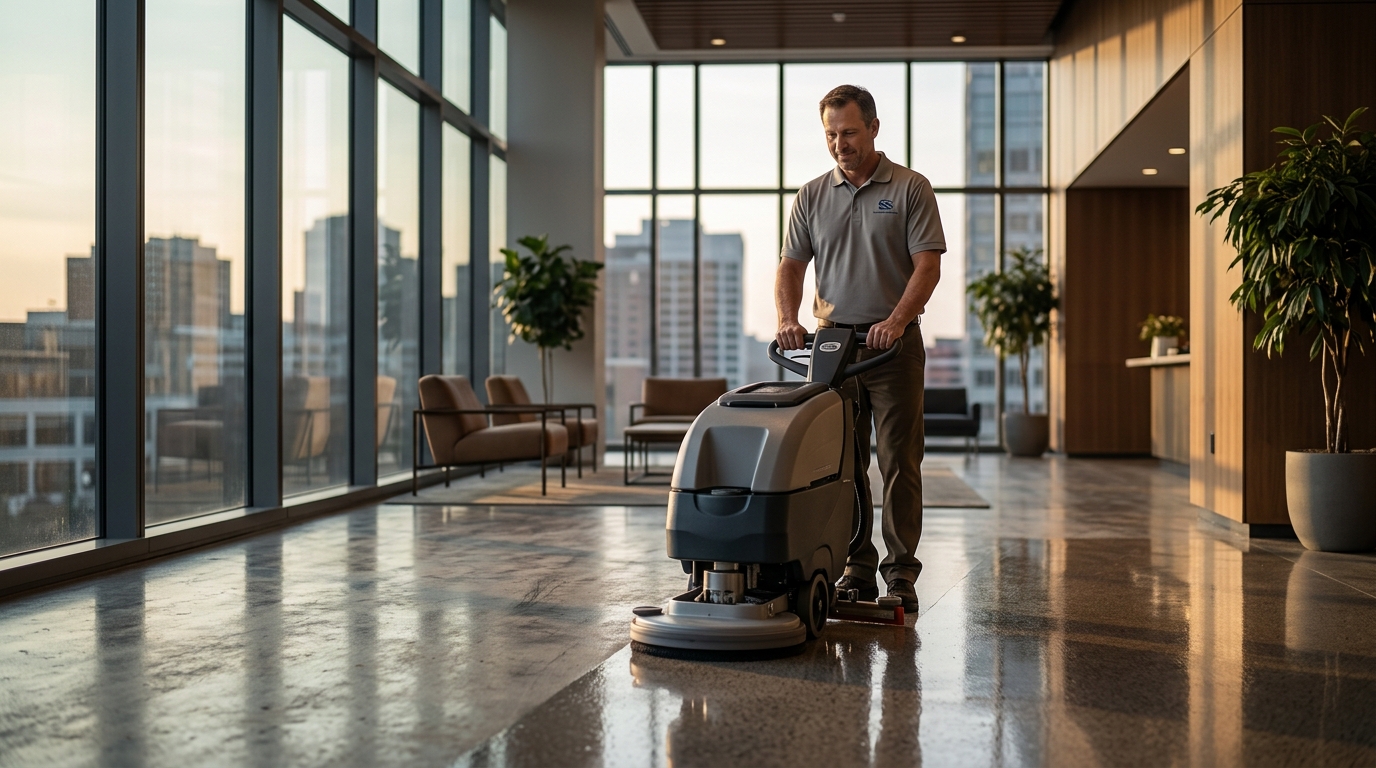
Commercial Floor Stripping and Waxing: Every Step Explained
Commercial floor stripping and waxing is a multi-step maintenance process that removes old, worn finish from hard floors and replaces it with fresh protective coats of wax. For businesses in Chester County, PA and surrounding areas, keeping VCT, vinyl, and tile floors in top condition is not just about appearance. It protects your investment, reduces long-term replacement costs, and sends the right message to every customer who walks through your door. Below, we break down each step so you know exactly what to expect when a professional crew handles the job.
Why Floor Stripping and Waxing Matters
Floor finish is a sacrificial coating. It absorbs scuffs, scratches, and dirt so the underlying tile or vinyl does not. Over time that protective layer yellows, dulls, and builds up unevenly. A standard strip-and-wax service removes every old layer down to bare flooring, then rebuilds protection from scratch.
According to flooring maintenance experts at Carlson Building Maintenance, hard floor systems like tile, vinyl, and laminate are porous and absorb dirt that becomes progressively harder to remove without stripping. Maintaining a wax layer extends floor life and keeps your facility looking professional.
Step 1: Area Preparation
Preparation is the foundation of a quality result. Before any chemicals are applied, the crew completes several tasks:
- All furniture, mats, and equipment are moved out of the work area.
- Wet-floor and caution signs are posted around the perimeter.
- The entire surface is dust-mopped or swept to remove loose debris.
This clearing step prevents contamination during the chemical stripping phase. At S&S Cleaning Service, our crews work around your schedule, often completing the entire process overnight so there is zero disruption to your employees and customers.
Step 2: Applying the Stripping Solution
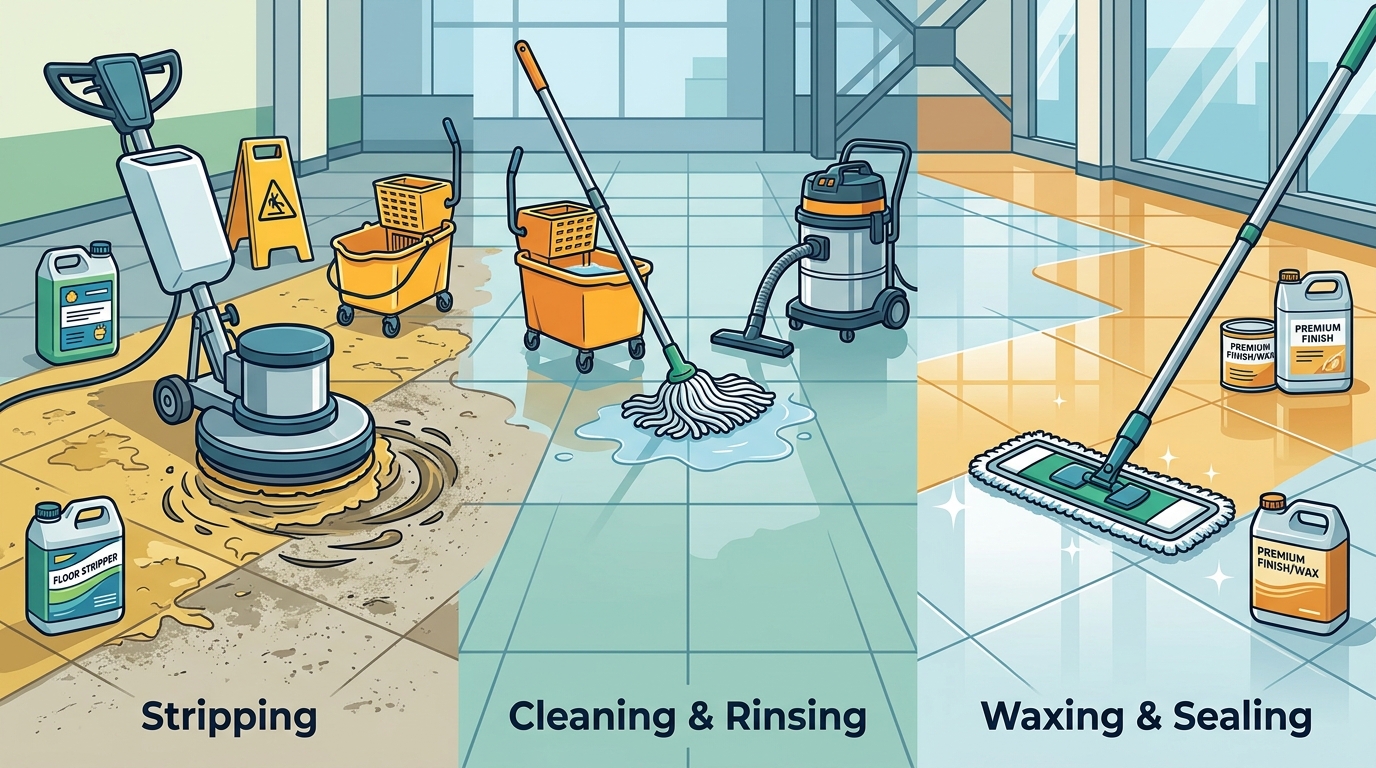
Floor stripping solution is a chemical product designed to dissolve and soften old wax layers. The solution is diluted according to the manufacturer's guidelines and applied evenly with a mop in manageable sections, typically 200 to 400 square feet at a time.
The solution must dwell on the surface for 10 to 15 minutes to loosen the old finish, but it should never be allowed to dry. Dried stripper becomes extremely difficult to remove and can damage the floor. Technicians wear gloves, eye protection, and shoe covers because stripping chemicals can irritate skin and corrode certain materials.
Step 3: Mechanical Scrubbing and Slurry Removal
Once the stripper has had time to work, a low-speed floor machine fitted with a black stripping pad agitates the surface. This mechanical action breaks down stubborn wax layers that chemicals alone cannot fully dissolve. The crew uses consistent, overlapping passes and pays special attention to corners and baseboards.
The resulting slurry, a mix of dissolved wax, chemicals, and dirt, is immediately vacuumed up with a wet/dry vacuum or auto-scrubber. As noted by Nilfisk, leaving residue behind can interfere with adhesion during the wax application step. In areas with heavy buildup, the stripping and scrubbing cycle may need to be repeated one to three times.
Step 4: Rinsing and Drying
Rinsing is a step that should never be skipped. The floor is mopped with clean water at least two to three times to neutralize and remove all remaining chemical residue. Leftover stripper will prevent new finish from bonding properly, leading to peeling and cloudy spots.
After rinsing, the floor must dry completely before any finish is applied. Professional crews use high-velocity air movers or fans to accelerate drying. This step is critical because moisture trapped beneath new wax causes adhesion failure. Our commercial cleaning FAQ covers common questions about dry times and scheduling.
Step 5: Sealing and Wax Application
Floor sealer is a base coat that fills microscopic pores and cracks in flooring materials like VCT and concrete. Sealing creates a smooth, uniform foundation so the wax adheres evenly. Two coats of sealer are typically applied before waxing begins.
Wax Coats: How Many Are Enough?
Using a clean finish mop or wax applicator, technicians lay down thin, even coats of commercial-grade floor finish. Each coat dries in approximately 30 to 45 minutes before the next is applied. Most commercial environments require three to five coats. High-traffic areas like lobbies, hallways, and retail floors may need five to six coats for added durability.
| Traffic Level | Recommended Wax Coats | Typical Facilities |
|---|---|---|
| Low | 3 coats | Executive offices, conference rooms |
| Medium | 4 coats | General office buildings, schools |
| High | 5-6 coats | Lobbies, retail, daycare centers |
| Heavy Industrial | 6+ coats | Warehouses, manufacturing plants |
S&S Cleaning Service includes tile floor stripping and waxing as part of our integrated facility maintenance plans, so you never need to coordinate with a separate vendor.
Step 6: Buffing and Final Inspection
Buffing is the final finishing step that gives floors their signature high-gloss shine. A high-speed burnisher polishes the top wax layer, curing it into a harder, more durable surface. The crew then inspects the entire floor for missed spots, uneven coverage, or edge imperfections.
The final coat should cure for at least eight hours before heavy foot traffic is permitted. Light foot traffic is generally safe within 30 minutes of the last coat drying. This is why most strip-and-wax jobs are scheduled during evenings or weekends.
How Often Should You Strip and Wax?
Frequency depends on traffic volume and facility type. Most commercial office buildings benefit from a full strip-and-wax at least once per year. Manufacturing and retail facilities with heavy foot traffic may need the service quarterly. Between full strip jobs, regular buffing and top-scrub-and-recoat maintenance extends the life of your wax significantly.
Signs Your Floors Need Stripping
- Visible yellowing or discoloration that buffing will not remove
- Wax buildup in corners and along baseboards
- Scuff marks that resist standard mopping
- Uneven sheen across the floor surface
Not sure if your floors are due? Request a free assessment from our team and we will evaluate your facility in person.
Key Takeaways
- Commercial floor stripping and waxing is a six-step process: prepare, strip, scrub, rinse, seal and wax, then buff.
- Stripping solution must dwell 10-15 minutes but never dry on the surface.
- Three to six coats of finish are standard, depending on foot traffic levels.
- Skipping the rinse step leads to adhesion failure and wasted product.
- Most offices need a full strip-and-wax once per year; high-traffic facilities need it quarterly.
- Professional crews complete the job overnight to avoid business disruption.
- Bundling floor care into your janitorial service plan simplifies scheduling and reduces costs.
Frequently Asked Questions
What is commercial floor stripping and waxing?
Commercial floor stripping and waxing is a detailed cleaning procedure that involves removing old layers of wax and grime from hard floors, then applying fresh coats of finish to restore shine and protection.
How long does a strip-and-wax service take?
Most small to mid-sized commercial spaces can be completed in a single overnight session. Larger facilities may require two nights. Dwell time for the stripping solution is 10 to 15 minutes per section, and each wax coat dries in about 30 to 45 minutes.
What types of flooring can be stripped and waxed?
VCT (vinyl composition tile), sheet vinyl, linoleum, and certain sealed concrete floors are ideal candidates. Wood, laminate, and ceramic tile floors should not be stripped and waxed with standard products.
How many coats of wax should be applied?
Three to five coats are standard for most commercial settings. High-traffic areas such as lobbies and retail spaces may benefit from five to six coats for added durability.
How often should commercial floors be stripped and waxed?
Once or twice per year is recommended for most offices. Manufacturing and retail facilities often need quarterly service. Regular buffing between strip jobs extends the finish life.
Is the process disruptive to business operations?
No. Professional cleaning companies schedule strip-and-wax work during off-hours, typically evenings or weekends. At S&S Cleaning Service, our crews work overnight so your facility is ready by morning.
What is the difference between buffing and stripping?
Buffing is a lighter maintenance step that polishes the existing wax surface to restore shine. Stripping is a deeper process that removes all old finish down to the bare floor so new wax can be applied.
Why should I hire a professional instead of doing it myself?
Professional crews have commercial-grade equipment, properly diluted chemicals, and the training to avoid common mistakes like letting stripper dry or applying wax too thickly. The result is a more durable, even finish that lasts longer and looks better.
Ready to Restore Your Floors?
S&S Cleaning Service is a veteran-owned, locally operated commercial cleaning company serving Chester County, PA and surrounding areas since 1993. Our integrated floor care programs include stripping, waxing, carpet cleaning, and routine janitorial services, all under one contract. Request your free, no-obligation estimate today and see the difference professional floor care makes.