
Medical Office Cleaning: Can Professional Cleaners Handle Specialized Sanitation for Clinical Environments?
Medical and clinical offices demand a level of cleanliness that goes far beyond what a standard office requires. From strict disinfection protocols dictated by OSHA and the CDC to the use of EPA-registered, hospital-grade products, medical facility cleaning is a specialized discipline. For healthcare practices across Chester County, PA and surrounding areas, partnering with a qualified commercial cleaning provider is one of the most effective ways to maintain compliance, protect patients, and reduce liability. This guide explains what specialized medical sanitation involves, which regulations apply, and how to choose the right cleaning partner for your practice.
What Is Medical Office Cleaning?
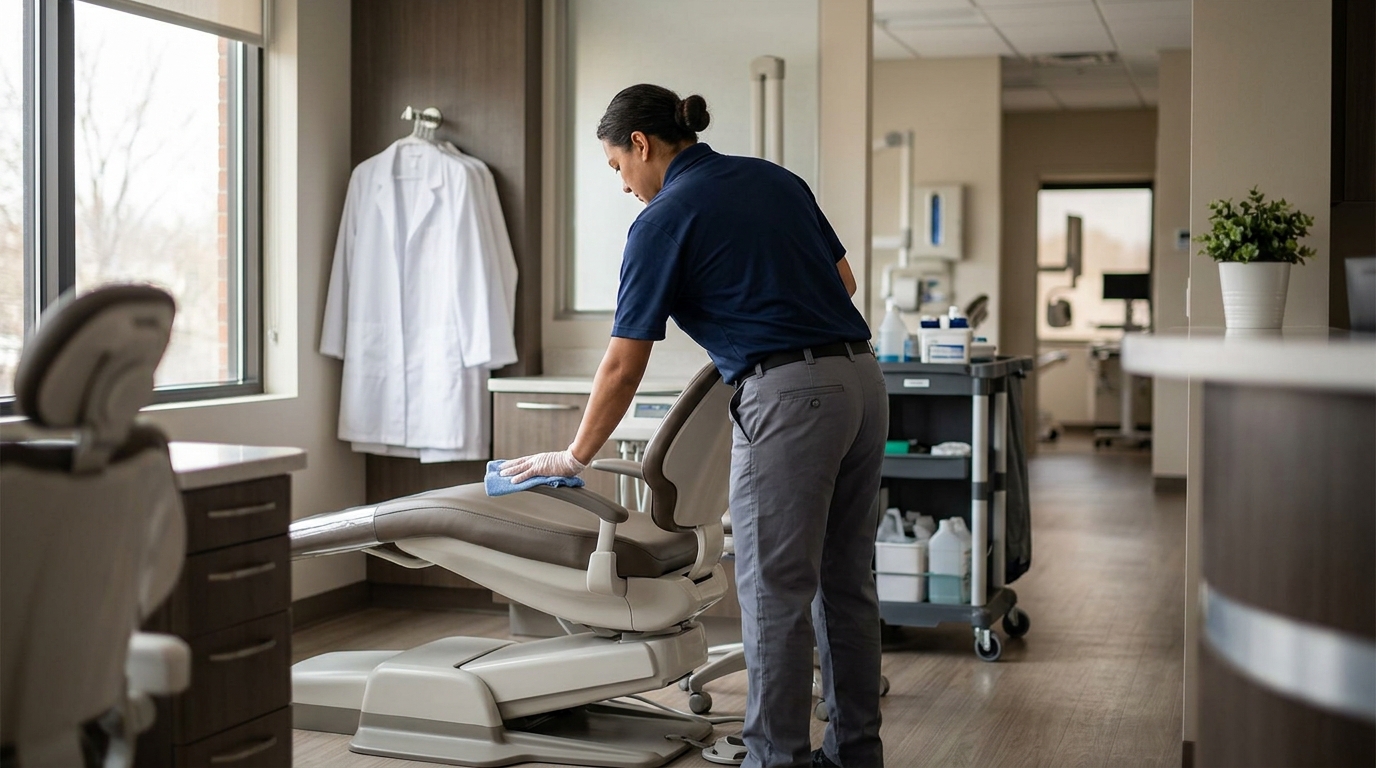
Medical office cleaning is the systematic process of removing contaminants, disinfecting surfaces, and maintaining a hygienic environment in healthcare settings such as physician offices, urgent care clinics, dental practices, and outpatient surgical centers. It differs from routine commercial office cleaning because it must address biological hazards, cross-contamination risks, and strict regulatory requirements.
Healthcare-associated infections (HAIs) are infections that patients get while or soon after receiving health care, according to the CDC. On any given day, about one in 31 hospital patients has at least one HAI. While outpatient medical offices face lower risk than hospitals, the same foundational cleaning principles apply.
Key Regulatory Standards: OSHA, CDC, and Beyond
Medical facilities must satisfy overlapping federal and state requirements. Understanding which standards apply is the first step toward compliance.
OSHA's Bloodborne Pathogen Standard
OSHA's Bloodborne Pathogen Standard (29 CFR 1910.1030) requires specific procedures for handling and disposing of biohazardous waste, decontaminating surfaces, and training cleaning staff. Medical offices must also comply with OSHA's Hazard Communication Standard, which mandates that all hazardous cleaning substances be properly labeled and that employees have access to Safety Data Sheets.
CDC Environmental Infection Control Guidelines
The CDC's Guidelines for Environmental Infection Control in Health-Care Facilities provide the foundational framework for surface disinfection, waste disposal, and cleaning frequency. These guidelines help organizations reduce HAIs and create compliant, healthy environments for employees and patients.
Additional Oversight Bodies
Facilities that accept Medicare or Medicaid must meet CMS Conditions of Participation, which include requirements for a sanitary environment. The EPA also regulates healthcare disinfectants under the Federal Insecticide, Fungicide, and Rodenticide Act (FIFRA).
| Regulatory Body | Primary Focus | Key Requirement |
|---|---|---|
| OSHA | Worker safety | Bloodborne pathogen handling, PPE, chemical labeling |
| CDC | Infection prevention | Surface disinfection protocols, cleaning frequency |
| CMS | Medicare/Medicaid compliance | Sanitary environment for participation |
| EPA | Disinfectant regulation | Hospital-grade product registration under FIFRA |
Cleaning vs. Sanitizing vs. Disinfecting
These three terms are often used interchangeably, but they describe different processes. Cleaning is the removal of dirt and impurities, including germs, from surfaces using soap and water or other cleaning agents, as defined by OSHA. Sanitizing is the process of reducing bacteria on a surface to safe levels as determined by public health standards. Disinfecting is the use of chemical agents to destroy or inactivate nearly all pathogenic organisms on a surface.
In medical environments, all three processes are typically performed in sequence. Using the wrong chemicals or allowing insufficient dwell time can produce surfaces that are not fully disinfected, leading to compliance failures and increased infection risk.
What to Expect from a Professional Medical Cleaning Service
A qualified provider should go well beyond basic vacuuming and trash removal. Here is what comprehensive medical-grade cleaning looks like:
Daily Tasks
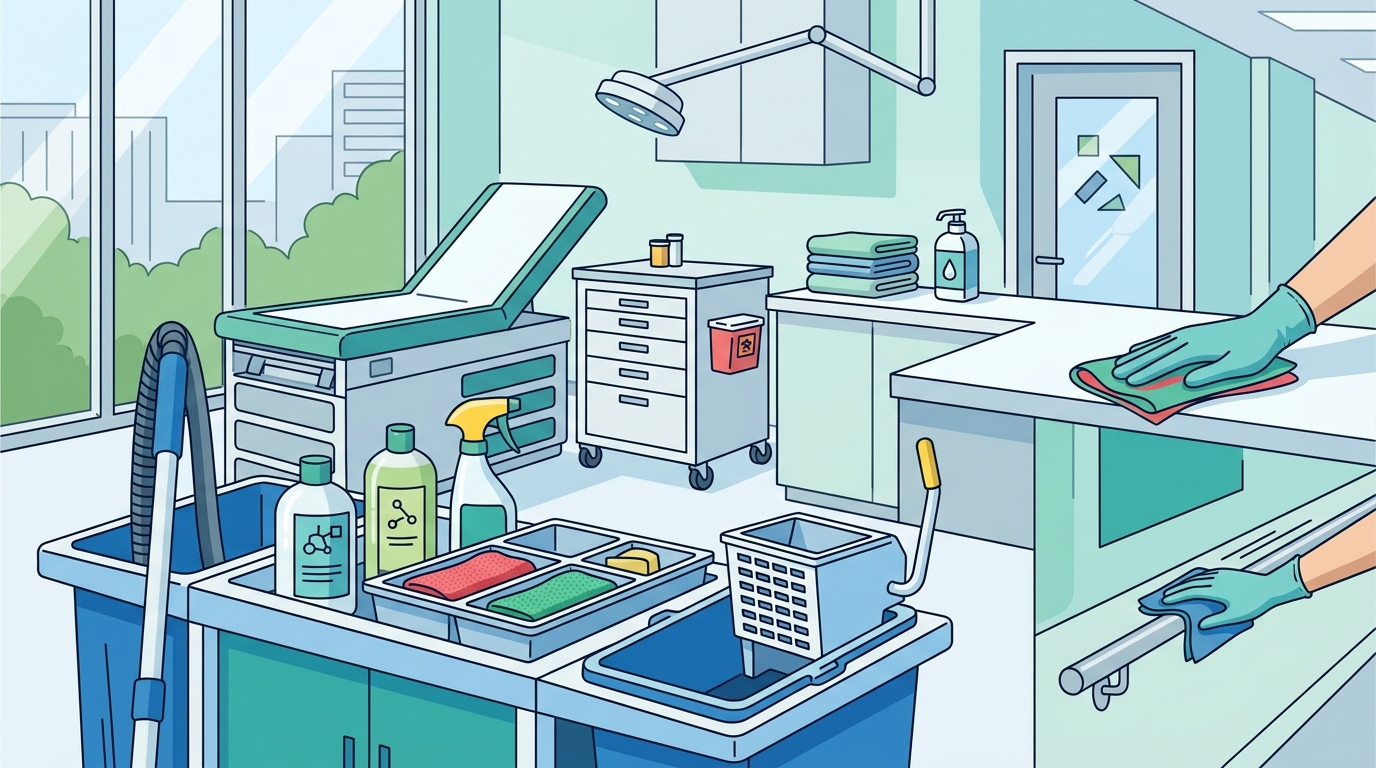
Daily cleaning focuses on high-touch areas and patient-facing environments where contamination risk is highest. This includes exam tables, door handles, light switches, reception counters, and restroom fixtures. EPA-approved, hospital-grade disinfectants should be standard.
Weekly and Monthly Deep Cleaning
Deeper sanitation tasks include floor stripping, baseboard cleaning, and thorough disinfection of waiting areas. At S&S Cleaning Service, specialized floor care services such as tile and grout cleaning, carpet extraction, and floor refinishing are bundled into ongoing maintenance programs so facilities do not need to juggle multiple vendors.
Staff Training and Documentation
Cleaning staff should be trained in infection control practices, proper PPE use, and correct application of disinfectants. A reliable provider maintains documentation and standard operating procedures for every area of your facility.
Common Mistakes in Medical Facility Cleaning
Even well-intentioned cleaning programs can fall short. Using incorrect disinfectants can reduce effectiveness, while skipping high-touch surfaces increases contamination risk. Inconsistent cleaning schedules create gaps in sanitation, and lack of staff training can result in improper procedures.
Improper biohazardous waste handling is another frequent issue that can lead to OSHA violations. Avoiding these mistakes requires structured cleaning protocols, proper training, and consistent oversight from a professional team experienced with medical environments.
Choosing the Right Commercial Cleaning Provider in Chester County
Not every janitorial company is equipped for clinical settings. When evaluating providers, look for these qualities:
- Healthcare sector experience: The company should understand CDC disinfection guidelines and OSHA standards.
- Trained, insured staff: Employees should be trained in infection control and bloodborne pathogen safety.
- Customizable plans: Your practice has unique scheduling and sanitation needs. Look for a provider offering custom cleaning plans rather than one-size-fits-all packages.
- Local accountability: A locally owned company can respond faster and build a more consistent relationship with your facility.
- Comprehensive services: Choosing a provider like S&S Cleaning Service that offers integrated floor care, window cleaning, and janitorial services under one contract reduces complexity.
S&S Cleaning Service is a veteran and family-owned commercial cleaning company serving Chester County, PA, including West Chester, Exton, Malvern, Downingtown, Kennett Square, and Paoli. With transparent answers to common cleaning questions and GPS-tracked crews, S&S brings the professionalism and accountability medical offices need.
Key Takeaways
- Medical office cleaning requires compliance with OSHA, CDC, CMS, and EPA standards that go far beyond routine janitorial work.
- On any given day, about 1 in 31 hospital patients has at least one healthcare-associated infection, making environmental cleaning a frontline defense.
- Cleaning, sanitizing, and disinfecting are distinct processes that must be performed correctly and in sequence in clinical settings.
- EPA-registered, hospital-grade disinfectants with proper dwell times are required for medical environments.
- Improper waste handling, inconsistent schedules, and untrained staff are the most common compliance risks.
- A locally owned, experienced provider like S&S Cleaning Service can deliver customized, compliant cleaning programs across Chester County and surrounding areas.
Frequently Asked Questions
What makes medical office cleaning different from regular office cleaning?
Medical office cleaning involves strict disinfection protocols, use of hospital-grade products, compliance with OSHA and CDC guidelines, and specialized handling of biohazardous waste. Standard office cleaning does not address these clinical requirements.
Which regulations govern medical facility cleaning?
Key regulations include OSHA's Bloodborne Pathogen Standard (29 CFR 1910.1030), CDC environmental infection control guidelines, CMS Conditions of Participation, and EPA disinfectant registration under FIFRA.
How often should a medical office be cleaned?
High-touch surfaces and patient areas should be cleaned and disinfected daily. Deeper cleaning tasks such as floor care and thorough disinfection of all areas should be performed weekly or monthly, depending on patient volume and facility type.
What are hospital-grade disinfectants?
Hospital-grade disinfectants are EPA-registered products proven effective against a broad spectrum of pathogens commonly found in healthcare settings. They require specific dwell times to achieve full efficacy.
Can a commercial cleaning company handle medical sanitation?
Yes, provided the company has healthcare cleaning experience, properly trained staff, and protocols aligned with OSHA and CDC standards. Not all commercial cleaners are qualified, so it is important to verify credentials and training programs.
Does S&S Cleaning Service clean medical offices in Chester County?
S&S Cleaning Service provides comprehensive commercial cleaning throughout Chester County, PA, including specialized sanitation services. Contact S&S for a free, no-obligation estimate tailored to your medical facility's needs.
What happens if a medical office fails a cleaning compliance inspection?
Consequences can include OSHA fines, loss of CMS Medicare/Medicaid participation, increased infection risk, and damage to the practice's reputation. Partnering with a qualified cleaning provider helps prevent these outcomes.
Does S&S Cleaning Service provide floor care for medical offices?
Yes. S&S offers integrated floor care services including tile and grout cleaning, carpet cleaning, and floor stripping and waxing as part of a bundled maintenance program.
Get a Customized Medical Cleaning Plan Today
Your medical practice deserves a cleaning partner that understands the stakes. S&S Cleaning Service, a veteran-owned company proudly serving Chester County and beyond since 1993, delivers reliable, compliance-focused commercial cleaning. Request your free estimate now and discover how one company, one contract, and complete facility care can simplify your operations.