
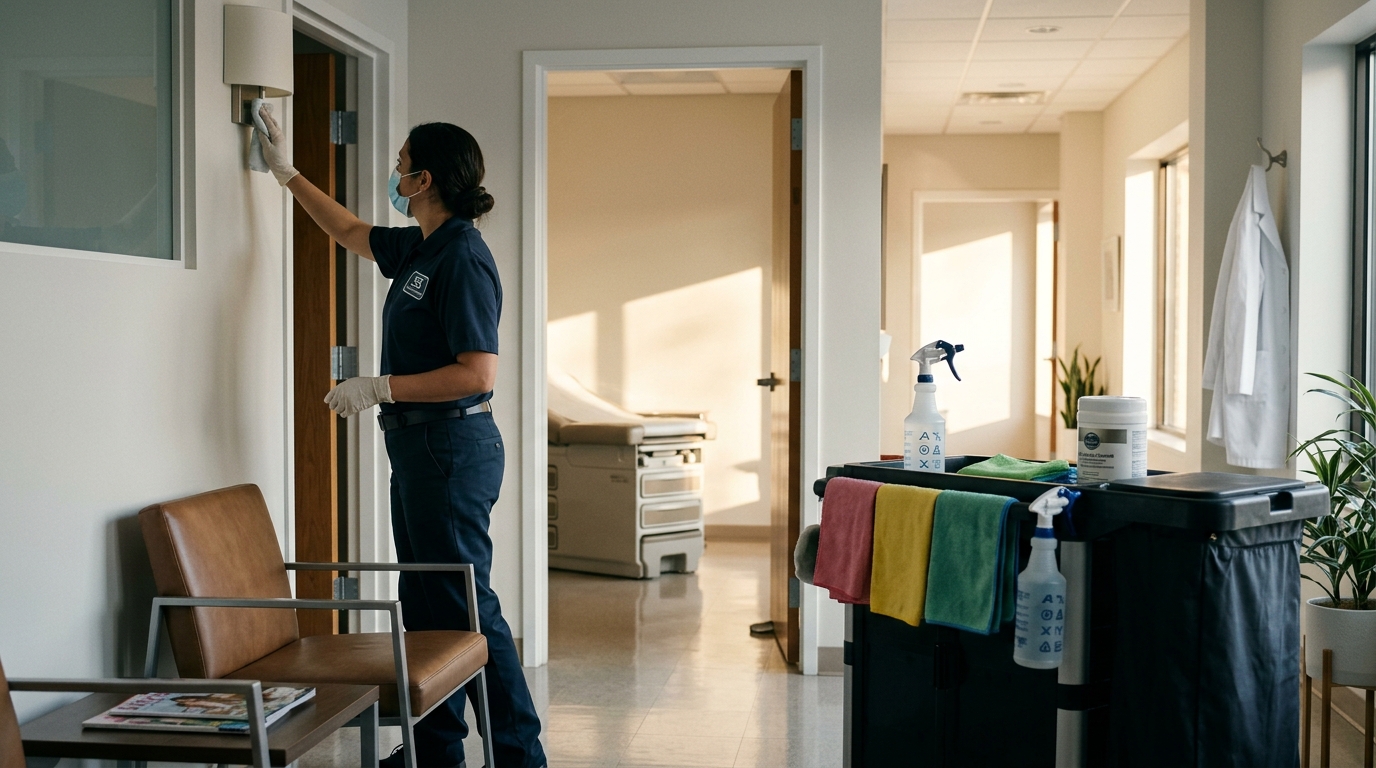
Medical Office Cleaning: How Professional Cleaners Meet Clinical Sanitation Standards
Medical and clinical environments demand a level of cleanliness that goes far beyond standard office maintenance. From exam rooms and waiting areas to lab surfaces and restrooms, every touchpoint in a healthcare facility carries infection risk. Professional commercial cleaners can absolutely accommodate specialized sanitation requirements for medical settings, but only when they bring the right training, products, and protocols. In Chester County, PA, and surrounding areas, healthcare facility managers are increasingly turning to experienced cleaning partners to maintain compliance and protect patients and staff alike.
Why Medical Cleaning Differs From Standard Office Cleaning
A standard office cleaning routine typically covers vacuuming, trash removal, and surface wiping. Medical office cleaning is a compliance-driven process that requires documented protocols, hospital-grade disinfectants, and staff trained in infection prevention.
Healthcare-associated infections, or HAIs, are infections that patients acquire while receiving treatment in a healthcare facility. According to the CDC, on any given day about 1 in 31 hospital patients has at least one HAI. That statistic underscores why clinical environments require specialized sanitation far beyond what a typical commercial cleaning service provides for a standard office.
The Regulatory Landscape: OSHA, CDC, and Beyond
Several federal agencies set the standards that govern medical facility cleanliness. Understanding these regulations is essential for any cleaning provider servicing healthcare spaces.
OSHA's Bloodborne Pathogen Standard
OSHA's Bloodborne Pathogen Standard (29 CFR 1910.1030) is a federal regulation that requires specific procedures for handling biohazardous waste, decontaminating surfaces, and training cleaning staff. Non-compliance can result in significant fines, increased safety risks, and reputational damage for the facility.
CDC Environmental Infection Control Guidelines
The CDC's Guidelines for Environmental Infection Control in Health-Care Facilities provide the foundational framework for surface disinfection, equipment handling, waste disposal, and cleaning frequency standards. These guidelines are regularly updated and apply to hospitals, outpatient clinics, and medical offices alike.
Additional Oversight
Facilities accepting Medicare and Medicaid must comply with CMS Conditions of Participation, which include requirements for a sanitary environment. The EPA also regulates healthcare disinfectants under the Federal Insecticide, Fungicide, and Rodenticide Act (FIFRA), ensuring that only approved products are used on clinical surfaces.
What Professional Cleaners Provide for Clinical Environments
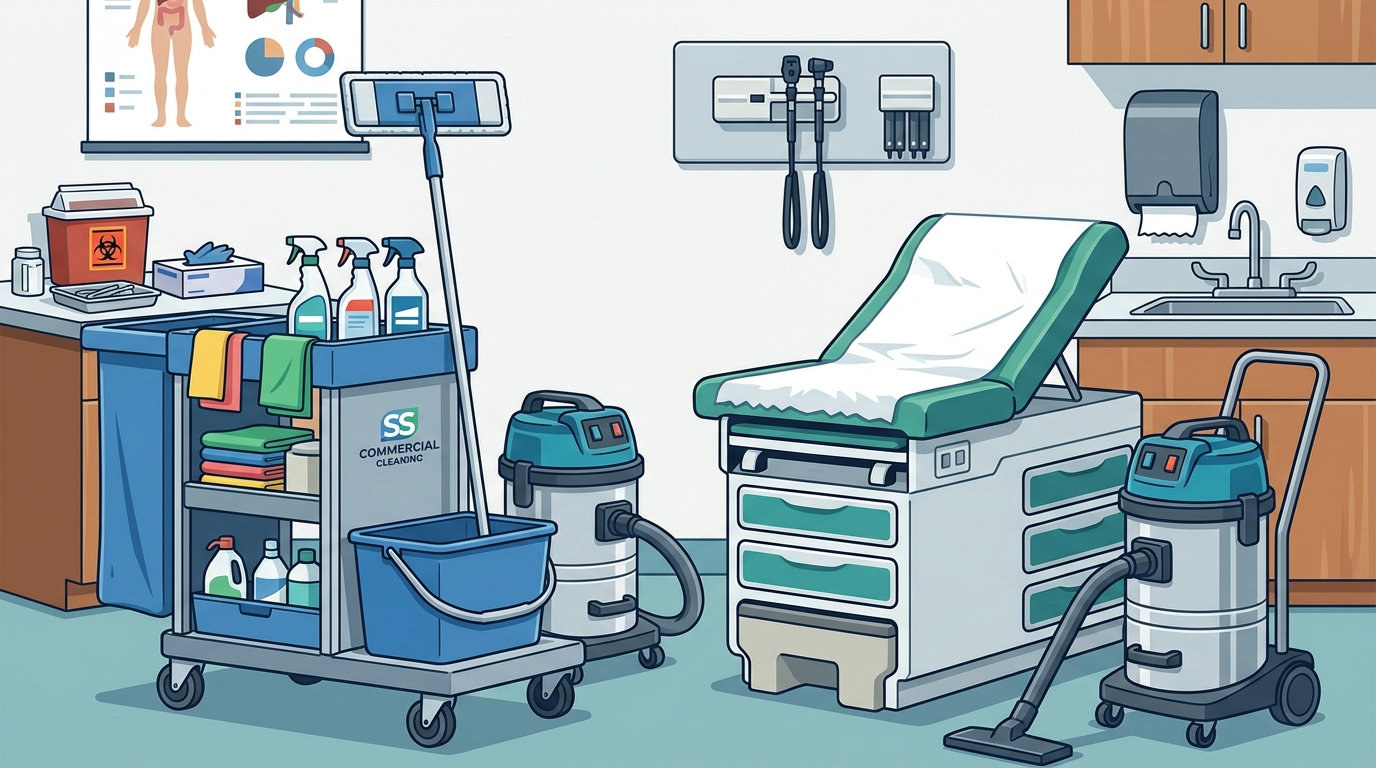
A qualified commercial cleaning company serving medical offices will deliver services that align with regulatory expectations. These typically include:
- Daily disinfection of high-touch surfaces such as door handles, light switches, and reception counters
- Proper restroom sanitization using EPA-registered, hospital-grade products
- Floor care with antimicrobial solutions suited for clinical settings
- Waste handling that separates general refuse from regulated medical waste
- Documented cleaning logs for compliance audits
At S&S Cleaning Service, our trained cleaning crew uses premium equipment and cleaning supplies to deep clean and deodorize facilities. Since 1993, we have served businesses across Chester County, PA, and we bring that same professionalism and attention to detail to healthcare environments.
Cleaning vs. Sanitizing vs. Disinfecting: Key Differences
These three terms are often used interchangeably, but they mean very different things in a medical context.
| Process | Definition | When Used in Medical Settings |
|---|---|---|
| Cleaning | The removal of dirt and impurities from surfaces using soap and water or other agents | First step before any disinfection; daily on all surfaces |
| Sanitizing | Reducing the number of bacteria on a surface to a safe level as determined by public health standards | Food preparation areas, break rooms within medical offices |
| Disinfecting | Destroying or inactivating most recognized pathogens on a surface using EPA-registered chemical agents | Exam rooms, procedure areas, restrooms; after every patient encounter |
Using the wrong chemicals or allowing insufficient dwell time can produce surfaces that are not fully disinfected, leading to compliance failures and increased infection risk. Professional cleaners understand proper dwell times and product selection for each area of a facility.
Choosing the Right Cleaning Partner for Your Medical Office
Not every commercial cleaning company is equipped to handle medical environments. When evaluating potential partners, healthcare facility managers should look for these qualities:
Training and Screening
Every member of the cleaning crew should be fully trained and screened. At S&S Cleaning Service, each team member undergoes thorough training and background checks before entering any client facility.
Custom Cleaning Plans
Medical offices have different needs than retail stores or corporate offices. Look for a provider that builds custom cleaning plans tailored to your facility type, patient volume, and regulatory requirements.
Local Accountability
Locally owned and veteran-operated companies like S&S Cleaning Service bring a level of personal accountability that national franchises often cannot match. We serve West Chester, Exton, Downingtown, Malvern, Paoli, Kennett Square, and surrounding communities throughout Chester County and into North Wilmington, DE.
Healthcare-Associated Infections: The Data That Drives Standards
The urgency behind medical cleaning standards is driven by hard data. The CDC's 2024 HAI Progress Report tracks infection rates across more than 38,000 U.S. healthcare facilities. While 2024 marked the third straight year of HAI declines at U.S. hospitals, the numbers remain significant.
| Metric | Data Point | Source |
|---|---|---|
| Daily HAI prevalence | 1 in 31 hospital patients | CDC |
| Estimated annual HAIs (U.S.) | ~722,000 | CDC/NHSN |
| Annual HAI-related deaths | ~75,000 | CDC |
| Estimated annual excess cost | $28–$33 billion | CDC |
| C. difficile decline (2023–2024) | 11% | CDC HAI Progress Report |
Proper environmental cleaning and disinfection remains the frontline defense against HAIs. It starts with trained staff, validated protocols, and the right products.
Key Takeaways
- Medical office cleaning requires compliance with OSHA, CDC, and CMS standards that go well beyond routine janitorial work.
- Healthcare-associated infections affect roughly 1 in 31 hospital patients daily, making proper sanitation critical.
- Professional cleaners must use EPA-registered, hospital-grade disinfectants with correct dwell times.
- Every cleaning team member should be trained in bloodborne pathogen handling and infection control protocols.
- Custom cleaning plans tailored to your facility type are essential for maintaining compliance.
- Locally owned companies like S&S Cleaning Service provide personal accountability and responsive service across Chester County, PA.
- Documented cleaning logs support your facility during regulatory audits and inspections.
Frequently Asked Questions
Can a commercial cleaning company handle medical office cleaning?
Yes, provided they have staff trained in infection control, use hospital-grade disinfectants, and follow OSHA and CDC protocols. Not all commercial cleaners offer this level of service, so it is important to verify their capabilities before hiring.
What is the difference between cleaning and disinfecting in a medical office?
Cleaning is the removal of dirt and impurities from surfaces. Disinfecting is the process of destroying or inactivating pathogens using EPA-registered chemical agents. Medical offices require both steps in sequence for proper sanitation.
What regulations apply to medical facility cleaning?
Key regulations include OSHA's Bloodborne Pathogen Standard (29 CFR 1910.1030), the CDC's Guidelines for Environmental Infection Control, CMS Conditions of Participation, and EPA rules governing disinfectant products under FIFRA.
How often should a medical office be cleaned?
Daily cleaning of high-touch surfaces is required, with deeper cleaning performed weekly and monthly. Exam rooms and procedure areas should be disinfected between every patient encounter.
Does S&S Cleaning Service clean medical offices in Chester County?
S&S Cleaning Service is a veteran-owned commercial cleaning company serving Chester County, PA, and surrounding areas since 1993. We provide customized cleaning plans for a wide range of business types, including healthcare facilities. Contact us for a free estimate.
What products should be used to clean a medical office?
Medical offices should use EPA-registered, hospital-grade disinfectants. The specific product depends on the surface type and the pathogens of concern. Your cleaning provider should be able to document every product used and its appropriate dwell time.
Why is documentation important for medical office cleaning?
Cleaning logs and checklists demonstrate compliance during regulatory audits and inspections. They also help identify gaps in cleaning schedules before they become infection risks.
What areas of a medical office need the most attention?
High-touch surfaces, patient exam rooms, restrooms, waiting areas, and reception desks require the most frequent cleaning and disinfection. Floors in clinical areas also need antimicrobial treatment on a regular schedule.
Get a Custom Medical Office Cleaning Plan
If you manage a medical or clinical facility in Chester County, PA, or the surrounding region, S&S Cleaning Service can build a cleaning program that meets your compliance needs. As a veteran-owned, locally operated company with over 30 years of experience, we take the worry out of keeping your facility safe and inspection-ready. Request your free estimate today and let us show you what professional, reliable cleaning looks like.